Ecommerce Customer Service Best Practices for Modern Online Businesses
In this article
- Ecommerce Customer Service Best Practices for Modern Online Businesses
- Introduction
- Why Ecommerce Customer Service Matters More Than Ever
- The Role of Customer Service in the Ecommerce Customer Experience
- Best Practices for Ecommerce Customer Service
- 1. Offer Multichannel Ecommerce Customer Support
- 2. Prioritize Speed and Responsiveness
- 3. Invest in Self-Service Ecommerce Support Solutions
- 4. Personalize Customer Interactions
- 5. Train Support Teams for Consistency and Empathy
- Using Technology to Improve Ecommerce Customer Service
- AI and Automation in Ecommerce Customer Support
- CRM Systems and Customer Data Integration
- Ecommerce Customer Service as a Customer Retention Strategy
- Measuring Ecommerce Customer Service Performance
- Common Challenges in Ecommerce Customer Service
- Future Trends in Ecommerce Customer Service
- How Bizzilo Can Support Ecommerce Customer Service Excellence
- Conclusion
Ecommerce Customer Service Best Practices for Modern Online Businesses
Introduction
In today’s competitive digital marketplace, ecommerce customer service has become a critical factor that defines brand success. Customers no longer judge online businesses solely on product quality or price. Their experience before, during, and after a purchase plays an equally important role in shaping loyalty and long-term relationships. With countless ecommerce options available, poor customer service can quickly drive shoppers to competitors.
Modern online businesses must focus on delivering fast, personalized, and consistent support across multiple channels. Strong ecommerce customer support not only resolves issues but also enhances trust, improves the overall ecommerce customer experience, and drives sustainable growth. This blog explores the most effective ecommerce customer service best practices and explains how businesses can use them to improve satisfaction, retention, and revenue.
Why Ecommerce Customer Service Matters More Than Ever
The expectations of online shoppers have changed significantly. Customers now demand instant responses, seamless interactions, and consistent service regardless of the platform they use. Whether it’s live chat, email, social media, or self-service portals, ecommerce brands must be accessible and responsive at all times.
Effective ecommerce customer service directly impacts conversion rates and repeat purchases. Studies consistently show that customers are more likely to return to brands that provide reliable and helpful support. On the other hand, unresolved issues, delayed responses, or unclear communication can damage trust and harm brand reputation.
Beyond resolving problems, customer service is a powerful differentiator. Businesses that invest in strong support systems stand out in crowded markets and build deeper emotional connections with their audience.
The Role of Customer Service in the Ecommerce Customer Experience
The ecommerce customer experience encompasses every interaction a shopper has with a brand, from browsing products to post-purchase support. Customer service plays a central role in shaping this journey.
A positive experience includes easy access to support, quick issue resolution, and clear communication. When customers feel supported, they are more confident in their purchase decisions and more forgiving when problems arise. High-quality customer service also reduces friction in the buying process, which can significantly improve conversion rates.
For modern online businesses, customer service is not a separate function. It is an essential part of the overall ecommerce experience that influences customer perception, satisfaction, and loyalty.
Best Practices for Ecommerce Customer Service
1. Offer Multichannel Ecommerce Customer Support
Customers interact with brands through multiple platforms, and they expect consistent service across all of them. Providing multichannel ecommerce customer support allows businesses to meet customers where they are.
Key support channels include:
- Email support for detailed inquiries
- Live chat for real-time assistance
- Social media messaging for quick responses
- Phone support for complex issues
- Self-service portals for instant answers
A unified support system ensures that customer information is accessible across channels, preventing repetitive conversations and improving efficiency.
2. Prioritize Speed and Responsiveness
Speed is one of the most important factors in ecommerce customer service. Customers expect quick responses, especially when they encounter issues during checkout, delivery, or returns.
Best practices include:
- Setting clear response time expectations
- Using automated acknowledgments
- Leveraging chatbots for instant replies
- Training support teams to handle inquiries efficiently
Faster response times reduce frustration, increase satisfaction, and enhance trust in the brand.
3. Invest in Self-Service Ecommerce Support Solutions
Many customers prefer solving issues on their own rather than contacting support teams. Self-service ecommerce support solutions empower customers to find answers quickly and reduce the workload on support agents.
Effective self-service tools include:
Knowledge bases and FAQs
Order tracking portals
Return and refund guides
Help centers with searchable content
Well-designed self-service solutions improve the customer experience while lowering operational costs.
4. Personalize Customer Interactions
Personalization is a powerful way to improve ecommerce customer service. Customers appreciate support that recognizes their history, preferences, and past interactions.
Personalized service can include:
- Addressing customers by name
- Viewing past orders and support tickets
- Offering tailored solutions based on behavior
- Recommending relevant products or resources
Personalized interactions make customers feel valued and contribute to a stronger emotional connection with the brand.
5. Train Support Teams for Consistency and Empathy
Technology alone cannot deliver great customer service. Skilled and empathetic support agents are essential for handling complex issues and emotional situations.
Best practices for training ecommerce support teams include:
- Teaching product and platform knowledge
- Developing communication and empathy skills
- Providing clear service guidelines
- Encouraging problem-solving and ownership
Consistent and empathetic service strengthens trust and enhances the overall ecommerce customer experience.
Using Technology to Improve Ecommerce Customer Service
Modern ecommerce businesses rely heavily on technology to deliver scalable and efficient customer service. The right tools can improve response times, streamline workflows, and enhance customer satisfaction. Platforms that incorporate AI Ecommerce Personalization allow support teams to provide tailored assistance and product recommendations, making interactions more relevant and improving overall customer experience.
AI and Automation in Ecommerce Customer Support
AI-powered tools such as chatbots and virtual assistants are transforming ecommerce customer support. These tools handle routine inquiries, provide instant responses, and guide customers through common processes.
Benefits of AI-driven support include:
- 24/7 availability
- Reduced response times
- Lower support costs
- Improved consistency
AI allows human agents to focus on complex issues that require critical thinking and empathy.
CRM Systems and Customer Data Integration
Customer relationship management systems centralize customer data, making it easier for support teams to deliver personalized service. Access to order history, preferences, and previous interactions enables faster and more accurate resolutions.
Integrated CRM systems improve collaboration, reduce errors, and enhance the overall ecommerce customer experience.
Ecommerce Customer Service as a Customer Retention Strategy
Customer service is one of the most effective customer retention strategies for ecommerce businesses. Retaining existing customers is often more cost-effective than acquiring new ones, and high-quality support plays a key role in retention. Combining excellent service with ecommerce loyalty programs further encourages repeat purchases and long-term engagement, creating a stronger bond between customers and the brand.
Satisfied customers are more likely to:
- Make repeat purchases
- Recommend the brand to others
- Leave positive reviews
- Remain loyal even when competitors offer lower prices
By resolving issues efficiently and exceeding expectations, ecommerce businesses can turn support interactions into opportunities for long-term growth.
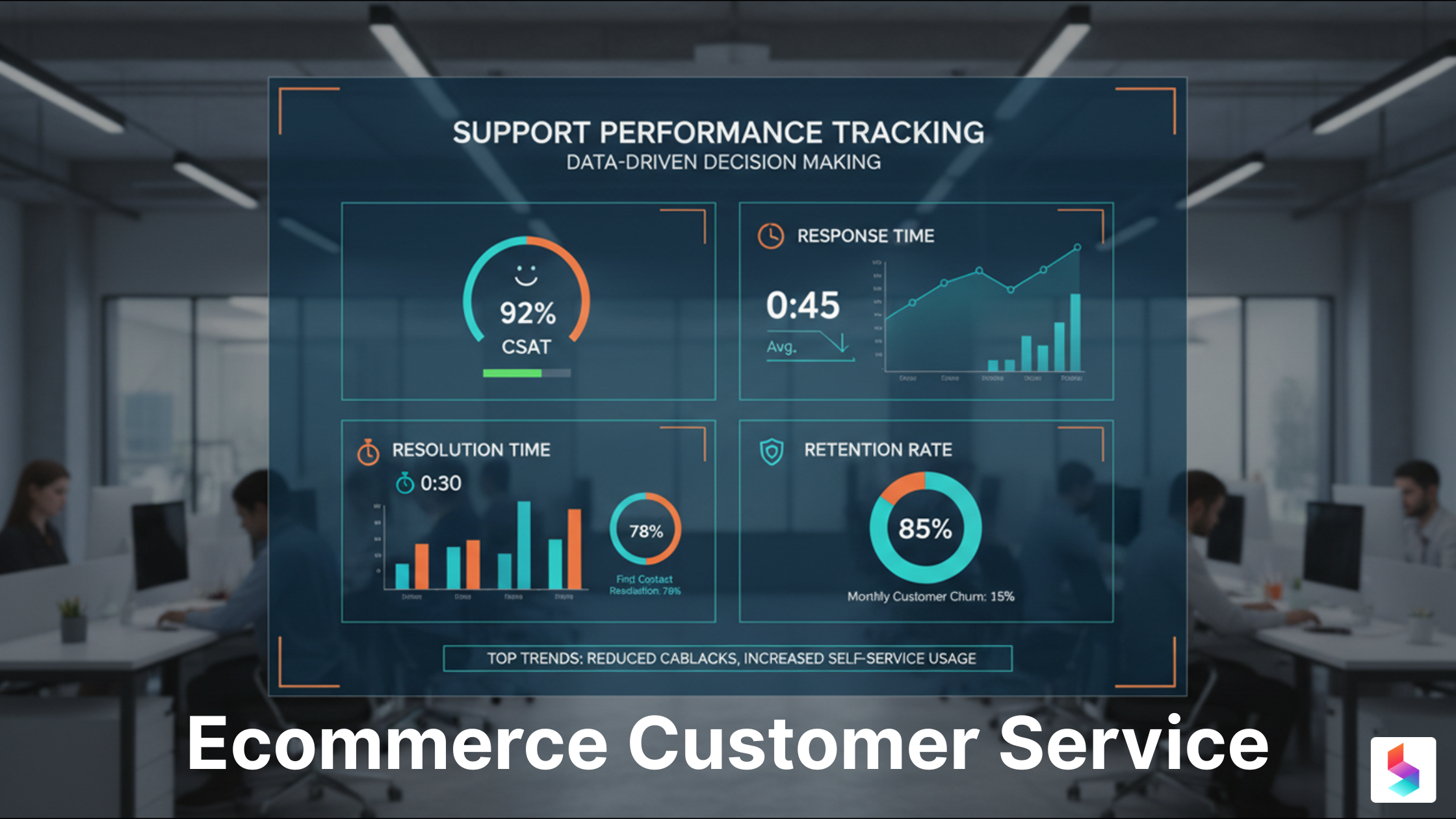
Measuring Ecommerce Customer Service Performance
To continuously improve ecommerce customer service, businesses must track performance using relevant metrics. Data-driven insights help identify gaps, optimize processes, and enhance customer satisfaction.
Key metrics include:
- First response time
- Resolution time
- Customer satisfaction score (CSAT)
- Net promoter score (NPS)
- Customer retention rate
Regular analysis of these metrics ensures that customer service strategies remain effective and aligned with business goals.
Common Challenges in Ecommerce Customer Service
Despite its importance, ecommerce customer service presents several challenges. These include managing high inquiry volumes, maintaining consistency across channels, and balancing automation with human interaction.
Other challenges include:
- Handling peak shopping seasons
- Managing returns and refunds efficiently
- Ensuring data security and privacy
- Scaling support as the business grows
Addressing these challenges requires a combination of skilled teams, reliable ecommerce support solutions, and ongoing optimization.
Future Trends in Ecommerce Customer Service
The future of ecommerce customer service will be shaped by technology, data, and customer expectations. Businesses must stay ahead of trends to remain competitive.
Key trends include:
- Increased use of AI and predictive support
- Voice-based customer service
- Deeper personalization through data analytics
- Proactive support based on customer behavior
Brands that adapt to these trends will deliver superior ecommerce customer experiences and strengthen customer loyalty.
How Bizzilo Can Support Ecommerce Customer Service Excellence
For modern online businesses, choosing the right technology partner is essential. Bizzilo helps ecommerce brands implement scalable and efficient customer service strategies that align with business goals.
By leveraging advanced ecommerce support solutions, data-driven insights, and customer-centric design, businesses can enhance service quality, improve retention, and drive sustainable growth.
Conclusion
Ecommerce customer service is no longer just a support function. It is a strategic asset that directly influences customer satisfaction, retention, and revenue. By adopting best practices such as multichannel support, personalization, self-service solutions, and AI-driven tools, modern online businesses can deliver exceptional customer experiences.
Strong ecommerce customer support builds trust, strengthens brand reputation, and supports long-term success. As customer expectations continue to evolve, businesses that invest in high-quality customer service will gain a lasting competitive advantage.
Frequently Asked Questions
1. What is ecommerce customer service?
Ecommerce customer service refers to the support provided to online shoppers before, during, and after a purchase to resolve issues and improve satisfaction.
2. Why is ecommerce customer support important?
Strong ecommerce customer support builds trust, improves customer experience, and increases repeat purchases and loyalty.
3. How does customer service improve ecommerce customer experience?
Quick responses, personalized assistance, and easy self-service options create a smooth and positive shopping experience.
4. What are the best ecommerce support solutions?
Effective solutions include live chat, AI chatbots, help centers, CRM systems, and multichannel support platforms.
5. How does ecommerce customer service support customer retention strategies?
By resolving issues efficiently and exceeding expectations, customer service encourages repeat purchases and long-term brand loyalty.