Ecommerce Product Bundling Explained: A Simple Strategy to Increase Sales
In this article
- Ecommerce Product Bundling Explained: A Simple Strategy to Increase Sales
- What Is Ecommerce Product Bundling?
- Why Ecommerce Businesses Use Product Bundling
- How Ecommerce Product Bundling Helps Increase Average Order Value
- Types of Product Bundling in Ecommerce
- Pure Bundling
- Mixed Bundling
- Cross-Category Bundling
- Creating an Effective Bundle Pricing Strategy
- Product Bundling Examples That Work in Ecommerce
- Building a Sustainable Product Bundle Strategy
- How Bizzilo Supports Ecommerce Product Bundling
- Common Mistakes to Avoid in Ecommerce Product Bundling
- Why Ecommerce Product Bundling Is a Long-Term Growth Strategy
Ecommerce Product Bundling Explained: A Simple Strategy to Increase Sales
In today’s competitive digital marketplace, ecommerce businesses are constantly looking for smarter ways to sell more without increasing marketing spending. One proven approach that continues to deliver results is ecommerce product bundling. Rather than selling individual products in isolation, brands are grouping complementary items together to create greater value for customers and higher revenue per order.
At its core, ecommerce product bundling is not about pushing more products aggressively. It is about simplifying buying decisions, improving the shopping experience, and encouraging customers to purchase more in a single transaction. When implemented correctly, this strategy can significantly increase average order value while also improving inventory movement.
This guide explains what ecommerce product bundling is, why it works so well, and how online businesses can use it as a sustainable growth strategy.
What Is Ecommerce Product Bundling?
Ecommerce product bundling refers to the practice of selling two or more products together as a single combined offer on an online store. These bundles are usually priced more attractively than buying each item individually, giving customers a clear incentive to choose the bundle.
From a business perspective, product bundling helps simplify merchandising and encourages customers to explore related items they may not have considered otherwise. From a customer’s point of view, bundles reduce decision fatigue and create a feeling of getting better value for money.
Although the concept of product bundling has existed in retail for decades, its impact is especially powerful in ecommerce, where customers are often overwhelmed by choice and quick decisions to matter.
Why Ecommerce Businesses Use Product Bundling
One of the biggest reasons online stores adopt product bundling is its ability to increase revenue without relying solely on traffic growth. Instead of acquiring more visitors, businesses maximise the value of each existing customer.
Bundling also supports better inventory management. Slow-moving or seasonal products can be paired with popular items, helping businesses reduce excess stock without resorting to heavy discounts. Additionally, bundles often improve the perceived value of an offer, making customers feel confident about their purchase.
When done thoughtfully, ecommerce product bundling improves the overall shopping experience rather than disrupting it.
How Ecommerce Product Bundling Helps Increase Average Order Value
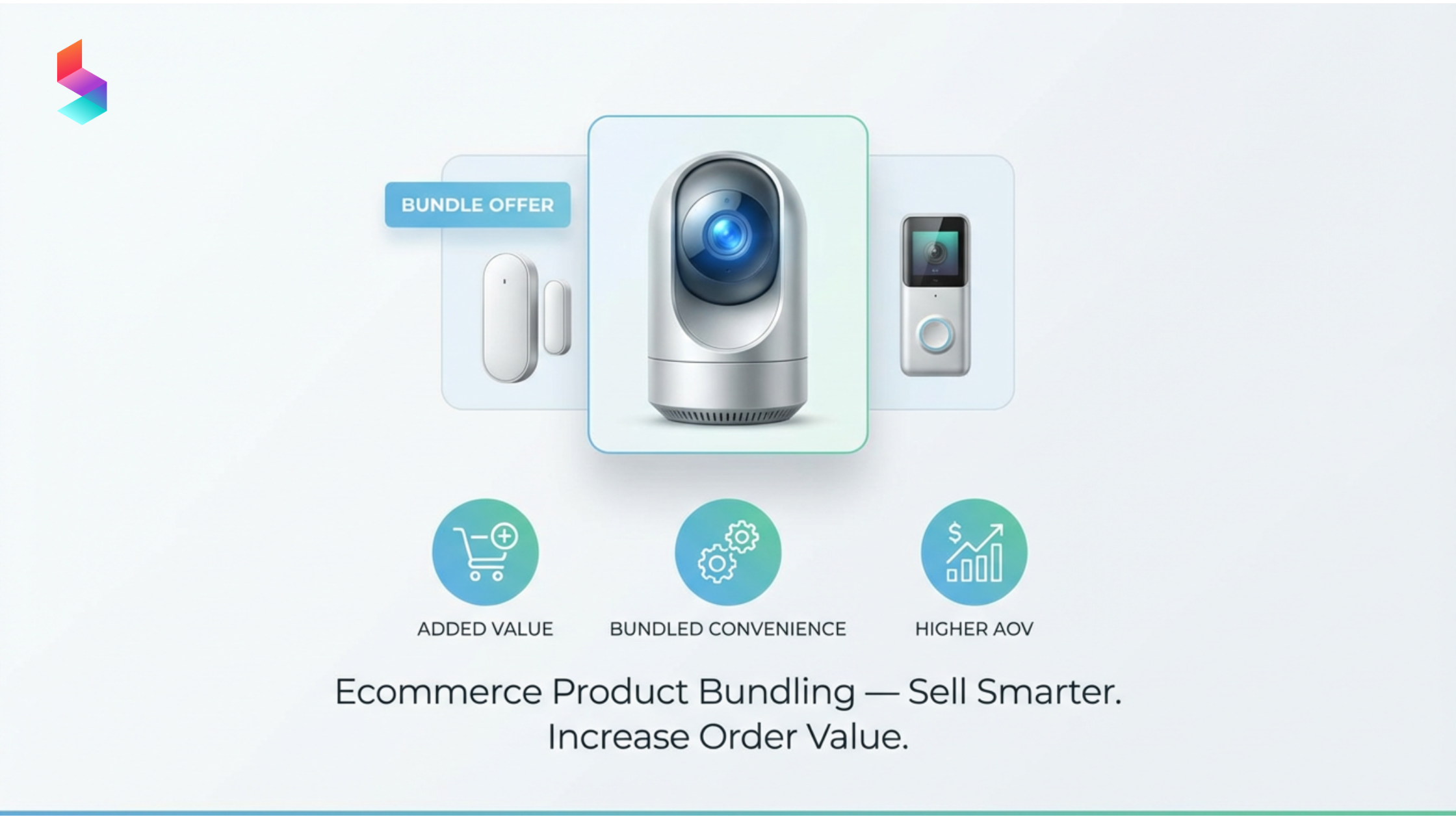
One of the most measurable benefits of ecommerce product bundling is its ability to increase average order value. Instead of adding one item to the cart, customers are encouraged to purchase a group of products together.
For example, a skincare brand might bundle a cleanser, toner, and moisturiser as a complete routine. Individually, a customer may have only purchased one product, but the bundle presents a ready-made solution at a perceived discount.
This approach works because customers tend to focus on value rather than individual pricing. When they see a bundle that solves a complete need, they are more likely to spend more on a single purchase.
Types of Product Bundling in Ecommerce
Understanding the types of product bundling helps businesses choose the right approach based on their products, pricing models, and customer behaviour. Each type of product bundling serves a specific purpose and delivers different outcomes.
Pure Bundling
Pure bundling is when products are available only as part of a bundle and not sold separately. Customers must purchase the entire set to access the products. This approach works well for tightly connected items such as software packages, starter kits, or curated collections where individual items have limited standalone value.
Pure bundling simplifies decision-making and clearly communicates value, but it works best when customers already understand the usefulness of all included products.
Mixed Bundling
Mixed bundling allows customers to purchase products either individually or as a bundle. This is the most common ecommerce product bundling approach because it offers flexibility while still encouraging higher-value purchases.
Customers who are price-sensitive can buy individual items, while value-focused buyers are drawn to the bundled offer. This balance makes mixed bundling highly effective for increasing average order value without limiting customer choice.
Cross-Category Bundling
Cross-category bundling combines complementary products from different categories into a single bundle. For example, an ecommerce store might bundle a core product with accessories, add-ons, or consumables.
This type of product bundling introduces customers to new product lines, increases order value, and improves overall product discovery. It is especially useful for brands looking to expand customer adoption across multiple categories.
Each of these types of product bundling supports different business goals. Successful ecommerce businesses often use a combination of approaches, testing and refining bundles based on customer response and sales performance.
Creating an Effective Bundle Pricing Strategy
A strong bundle pricing strategy is essential for making ecommerce product bundling successful. Pricing must clearly communicate savings without undervaluing the products.
The most common approach is value-based pricing, where the bundle is priced slightly lower than the combined cost of individual items. This creates an immediate incentive without damaging profit margins.
Another effective pricing method is tiered bundling. Businesses offer multiple bundles at different price points, allowing customers to choose based on their needs and budget. This not only increases average order value but also improves customer satisfaction by offering choice.
The key is transparency. Customers should instantly understand why the bundle offers better value.
Product Bundling Examples That Work in Ecommerce
Looking at real-world product bundling examples helps clarify how this strategy can be applied across industries.
In fashion ecommerce, bundles often include coordinated outfits or accessories paired with clothing items. Customers appreciate the convenience of purchasing a complete look rather than individual pieces.
In electronics, bundles may combine a core product with essential accessories, such as headphones, cables, or extended warranties. These bundles reduce friction by ensuring customers have everything they need from day one.
Subscription-based businesses also use product bundling effectively by offering starter kits or multi-product plans that introduce customers to a wider range of offerings.
These product bundling examples demonstrate how bundles can enhance value while improving conversion rates.
Building a Sustainable Product Bundle Strategy
A long-term product bundle strategy goes beyond creating one-off offers. It involves understanding customer behaviour, purchase patterns, and product relationships.
Successful ecommerce businesses regularly review bundle performance, adjusting combinations based on what customers actually buy together. Data-driven bundling ensures that offers remain relevant and profitable.
Seasonal bundles are another effective tactic. By aligning bundles with festivals, holidays, or specific customer needs, businesses can create timely offers that feel personalised rather than generic.
When product bundling is treated as a core merchandising strategy rather than a temporary promotion, it delivers consistent results.
How Bizzilo Supports Ecommerce Product Bundling
To execute ecommerce product bundling effectively, businesses need a platform that supports flexible product grouping without operational complexity. Bizzilo allows ecommerce businesses to create and manage product bundles directly within the platform, and its Automated Order Fulfillment ensures that bundled orders are processed accurately and efficiently, saving time and reducing errors. This makes bundles not just marketing ideas but fully operational sales units that can be managed seamlessly.
Beyond creating bundles, Bizzilo helps maintain accurate inventory by automatically tracking stock levels for bundled products in real time. When a bundle is sold, individual product quantities are adjusted accordingly, reducing the risk of overselling. This enables businesses to scale product bundling strategies confidently without manual inventory reconciliation.
Common Mistakes to Avoid in Ecommerce Product Bundling
While ecommerce product bundling is powerful, it can backfire if implemented poorly. One common mistake is bundling unrelated products that do not solve a clear customer problem.
Another issue is over-discounting. If bundles are priced too low, customers may begin to perceive individual products as overpriced, harming long-term profitability.
Finally, poor presentation can reduce effectiveness. Bundles should be clearly explained with strong visuals and simple messaging, so customers immediately understand the value.
Why Ecommerce Product Bundling Is a Long-Term Growth Strategy
As ecommerce continues to evolve, businesses must focus on strategies that improve efficiency as well as revenue. Ecommerce product bundling achieves both when supported by the right systems. With platforms like Bizzilo enabling structured bundle creation and inventory control, businesses can increase average order value, improve inventory movement, and deliver a smoother customer experience without adding operational strain.
Rather than chasing short-term sales spikes, product bundling builds sustainable growth by encouraging smarter purchasing decisions. Combined with ecommerce loyalty programs, bundles can further incentivize repeat purchases, turning one-time buyers into loyal customers who return for future offers and promotions.
For ecommerce businesses looking to grow without increasing acquisition costs, product bundling remains one of the most practical and scalable strategies available. When supported by a platform like Bizzilo that simplifies bundle management and fulfilment, ecommerce product bundling becomes not just a sales tactic, but a sustainable growth engine.
Frequently Asked Questions:
1. What is ecommerce product bundling?
Ecommerce product bundling is the practice of selling multiple products together as a single offer to increase value for customers and revenue for businesses.
2. How does product bundling increase average order value?
By encouraging customers to purchase multiple related items together, product bundling increases the total value of each transaction.
3. What types of product bundling work best for ecommerce?
Mixed bundling is the most common approach, allowing products to be sold individually or as part of a bundle.
4. Is product bundling suitable for small ecommerce businesses?
Yes, product bundling is highly effective for small businesses as it improves conversions without requiring additional marketing to spend.
5. How should bundles be priced?
A clear bundle pricing strategy should offer visible savings while maintaining healthy profit margins.