User-Generated Content Strategies That Help Ecommerce Brands Sell More
In this article
- User-Generated Content Strategies That Help Ecommerce Brands Sell More
- What Is User Generated Content in eCommerce?
- Why User Generated Content Helps Ecommerce Brands Sell More
- Building an Effective UGC Strategy for eCommerce
- How User Generated Content Marketing Drives Engagement
- Scaling UGC with a User Generated Content Platform
- Encouraging Consistent UGC Creation
- The Role of User Generated Content Video in Conversions
- Using UGC Influencer Marketing the Right Way
- Where to Use User Generated Content for Best Results
- Measuring the Success of Your UGC Strategy
- Final Thoughts: Turning User Generated Content into Sustainable Sales
User-Generated Content Strategies That Help Ecommerce Brands Sell More
In today’s competitive eCommerce landscape, customers no longer rely only on brand promises to make purchasing decisions. They look for proof. They want to see how products perform in real life, how other customers feel about them, and whether the experience matches expectations. Emerging social ecommerce trends show that integrating real customer content into social platforms significantly influences purchasing behavior, making user generated content one of the most powerful drivers of trust and sales.
Unlike traditional marketing assets, user generated content comes directly from customers and creators. It reflects honest experiences, real use cases, and unfiltered opinions. When used strategically, it helps eCommerce brands build credibility, engage shoppers, and ultimately sell more.
This blog explores user-generated content strategies that help eCommerce brands sell more, focusing on practical approaches that improve engagement while keeping the customer at the center of the experience
What Is User Generated Content in eCommerce?
User generated content includes any form of content created by customers, users, or creators rather than the brand itself. In an eCommerce context, this content often plays a key role in influencing buying decisions because it feels authentic and relatable.
Common forms of user generated content include customer reviews, product photos, clearly shared experiences, and short-form videos posted on social media or submitted directly to brands. Unlike branded campaigns, this content does not try to sell aggressively. Instead, it reassures potential buyers through genuine experiences.
From a shopper’s point of view, user generated content answers questions that product descriptions cannot. It shows how a product fits into daily life, how it looks outside of studio lighting, and whether it delivers value.
Why User Generated Content Helps Ecommerce Brands Sell More
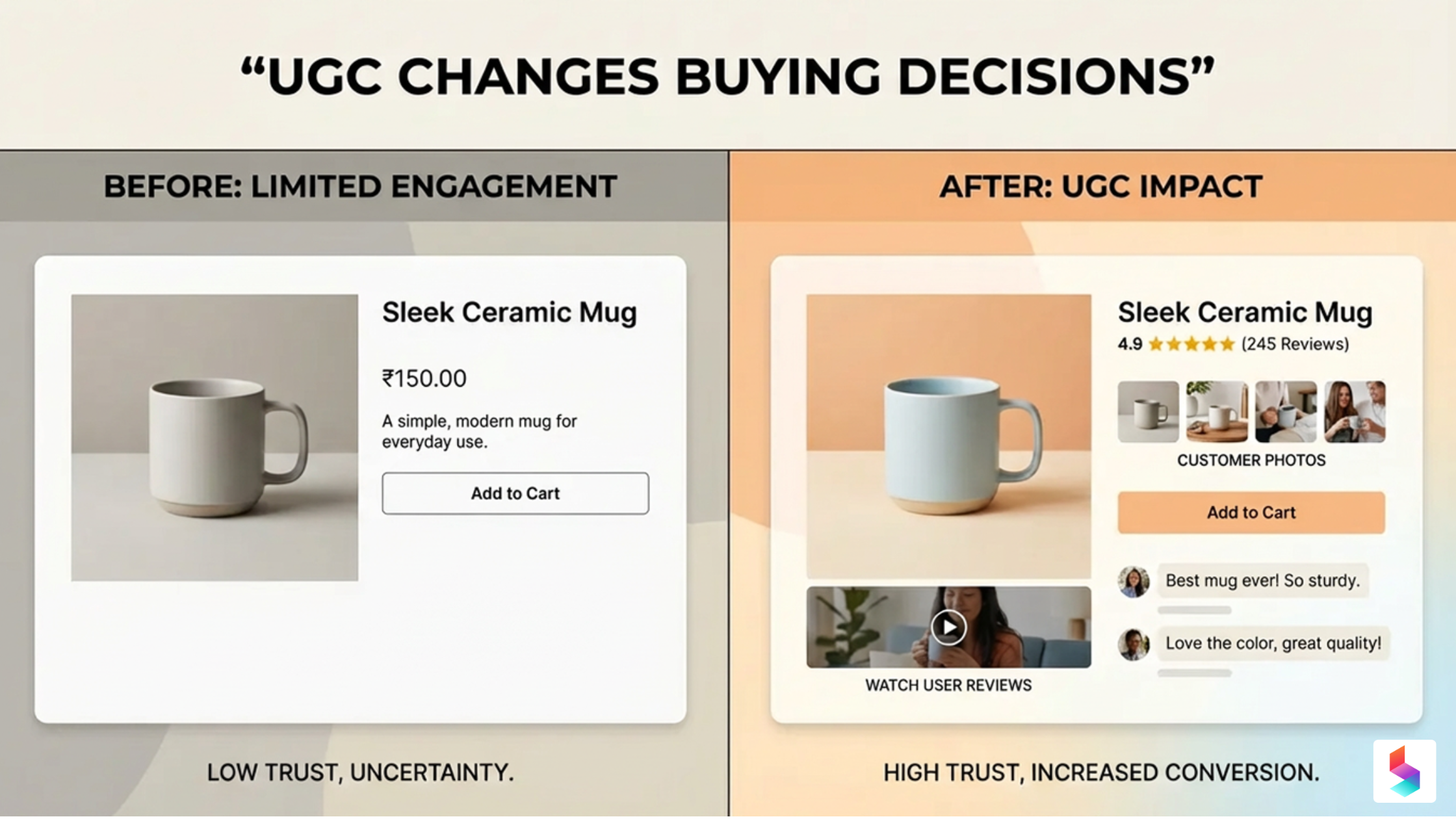
Trust is the foundation of every successful online sale. Without it, shoppers hesitate, compare endlessly, or abandon carts. User generated content helps remove this hesitation by offering social proof from real customers.
When shoppers see others using and recommending a product, confidence increases naturally. This sense of reassurance directly impacts conversion rates, especially for first-time buyers.
User generated content supports eCommerce growth by:
- Building credibility through real customer experiences
- Reducing buyer hesitation during decision-making
- Improving engagement on product and landing pages
- Supporting SEO with fresh and relevant content
For users, the buying journey feels simpler and more transparent. For brands, the result is higher trust and improved sales performance.
Building an Effective UGC Strategy for eCommerce
A successful UGC strategy is intentional and customer focused. Brands that randomly collect content often fail to see meaningful results. Instead, UGC should be planned around specific goals such as improving conversions, increasing engagement, or strengthening trust.
An effective UGC strategy starts by identifying where user generated content will have the most impact. This may include product pages, homepages, social media, or paid campaigns. Once placement is clear, brands can focus on encouraging consistent content creation.
A strong UGC strategy typically includes:
- Clear objectives aligned with business goals
- Simple methods for users to submit content
- Guidelines that encourage authenticity without restrictions
- Regular use of UGC across marketing channels
From the user’s perspective, the experience should feel effortless. When contributing content is easy and appreciated, customers are more willing to participate.
How User Generated Content Marketing Drives Engagement
User generated content marketing shifts the focus from brand-led promotion to customer-driven storytelling. Instead of brands explaining why their products are valuable, customers demonstrate it through real experiences.
This approach works because it aligns with how modern consumers make decisions. Buyers trust peer recommendations more than advertisements, especially in crowded digital marketplaces.
User generated content marketing helps brands by:
- Creating authentic connections with potential buyers
- Increasing time spent on product pages
- Encouraging repeat visits and brand loyalty
- Reducing the need for constant branded content creation
For users, this type of marketing feels less intrusive and more helpful. It supports informed decision-making rather than pushing sales messages.
Scaling UGC with a User Generated Content Platform
As user generated content increases, managing it manually becomes inefficient. A user generated content platform allows eCommerce brands to collect, organize, and publish UGC at scale while maintaining consistency and quality. Additionally, integrating ecommerce customer service support into these platforms ensures timely responses to user submissions, enhancing trust and improving the overall customer experience.
These platforms help brands streamline approvals, manage permissions, and track performance. They also ensure that UGC appears in the right place at the right time.
A user generated content platform typically enables brands to:
- Collect UGC from multiple channels
- Organize content by product or campaign
- Display approved content across websites and ads
- Measure engagement and conversion impact
From a customer standpoint, structured platforms increase confidence in submitting content. For brands, they turn UGC into a long-term growth asset.
Encouraging Consistent UGC Creation
Many customers are happy to share experiences but need a reminder or prompt. UGC creation becomes consistent when brands actively invite participation in a natural and friendly way.
Post-purchase emails, follow-up messages, and social media prompts are effective ways to encourage users to share content. The key is to keep the request conversational and appreciative rather than transactional.
Brands can encourage UGC creation by:
- Asking customers to share how they use the product
- Featuring user content on product pages and social media
- Offering recognition or small incentives
- Highlighting customer stories regularly
When users feel valued, they are more likely to contribute content and remain engaged with the brand.
The Role of User Generated Content Video in Conversions
User generated content video has become one of the most influential formats in eCommerce. Videos communicate emotion, usability, and trust faster than any other content type.
From a user perspective, watching a real person explain or demonstrate a product feels more believable than reading a description. These videos help answer questions, remove doubts, and increase confidence before purchasing.
User generated content videos are especially effective because they:
- Show products in real-world situations
- Build emotional connection with viewers
- Perform well on social media and paid ads
- Increase conversion rates on product pages
Even short, unedited videos recorded on mobile devices often outperform highly produced brand videos because they feel honest and relatable.
Using UGC Influencer Marketing the Right Way
Influencer marketing has shifted toward authenticity. UGC influencer marketing focuses on creators producing content that mirrors real customer experiences rather than scripted endorsements.
This approach to user generated content influencer marketing allows brands to maintain credibility while benefiting professional-quality content. The key is allowing creators to speak honestly and naturally about their experience with the product.
Effective influencer-led UGC works best when:
- Content focuses on usage rather than promotion
- Creators align with the brand’s target audience
- Messaging remains transparent and experience-driven
For users, this type of content feels trustworthy. For brands, it delivers scalable and reusable UGC across multiple channels.
Where to Use User Generated Content for Best Results
Placement plays a critical role in UGC performance. User generated content should appear at moments when buyers need reassurance the most.
The most effective placements include:
- Product pages to support purchase decisions
- Homepages to build immediate trust
- Landing pages for campaigns and promotions
- Social media and email marketing
When placed strategically, user generated content reduces friction and helps buyers move forward with confidence.
Measuring the Success of Your UGC Strategy
To ensure long-term success, brands must measure how user generated content impacts performance. Tracking engagement, conversions, and behavior on UGC-enabled pages provides valuable insights.
Important metrics to monitor include conversion rate improvements, time spent on pages, engagement with UGC posts, and repeat purchases influenced by UGC. These insights help refine the UGC strategy over time.
Customer feedback also plays a role. When users see their content featured, it strengthens loyalty and encourages continued participation.
Final Thoughts: Turning User Generated Content into Sustainable Sales
User generated content is no longer optional for eCommerce brands. It has become a core growth driver. Customers trust real experiences, and brands that showcase these voices stand out in competitive markets.
By developing a clear UGC strategy, using the right user generated content platform, encouraging consistent UGC creation, and leveraging video and influencer-driven content, eCommerce brands can turn trust into sales.
From the user’s point of view, UGC simplifies decision-making. From the brand’s point of view, it creates authenticity on a scale. When aligned properly, user generated content marketing becomes one of the most powerful tools for sustainable eCommerce growth.
Frequently Asked Questions
1. What is user generated content in eCommerce?
User generated content is content created by customers, such as reviews, photos, and videos, that shows real product experiences and builds trust.
2. How does user generated content help increase eCommerce sales?
User generated content builds credibility and reduces hesitation, helping shoppers make confident decisions and improving conversion rates.
3. What is the difference between UGC and influencer marketing?
UGC comes from real customers, while UGC influencer marketing involves creators producing authentic content without sounding promotional.
4. Why is user generated content video important for online stores?
User generated content video shows products in real use, builds emotional trust, and helps buyers decide faster.
5. How can eCommerce brands encourage customers to create UGC?
Brands can request reviews post-purchase, invite social sharing, feature user content, and offer simple incentives or recognition.